What was the overall outcome of the Battle of Tannenberg?
The Battle of Tannenberg resulted in a decisive German victory, nearly annihilating the Russian Second Army and inflicting a catastrophic defeat. Germany captured over 92,000 Russian soldiers and took 300 guns, while suffering significantly fewer casualties. This strategic triumph boosted German morale, stabilized the Eastern Front for a time, and severely hampered Russia's offensive capabilities in the early stages of World War I.
Why is it called the Battle of Tannenberg?
The battle was named Tannenberg by German commanders Paul von Hindenburg and Erich Ludendorff for symbolic reasons. It deliberately evoked the Battle of Tannenberg of 1410, where Teutonic Knights were defeated by a Polish-Lithuanian army. The 1914 German victory was presented as a reversal of that historical defeat and a reclaiming of German honor, despite the actual fighting occurring near Hohenstein, not the medieval Tannenberg site.
How did terrain influence the Battle of Tannenberg?
Terrain heavily influenced the Battle of Tannenberg. East Prussia's landscape, characterized by vast forests, numerous lakes, and extensive marshlands, severely hampered Russian troop movements and communications. The Masurian Lakes system, in particular, created natural barriers that the German forces skillfully exploited to channel and encircle the Russian armies, making coordinated Russian maneuvers incredibly difficult and contributing significantly to their downfall.
Can I find digital versions of Tannenberg battle maps?
Yes, numerous digital versions of Tannenberg battle maps are readily available online. Reputable sources include the Library of Congress, the National Archives, and various university military history departments, which often host high-resolution scans of historical maps. Specialist World War I history websites and educational platforms also provide interactive and static maps, allowing detailed study from any U.S. location.
What did the Battle of Tannenberg mean for Russia?
For Russia, the Battle of Tannenberg was a devastating blow. It resulted in the loss of an entire army, significant casualties, and a severe setback for their war effort on the Eastern Front. The defeat exposed profound weaknesses in Russian military leadership, communication, and logistics, contributing to declining morale and increasing public discontent. It highlighted the challenges Russia faced in sustaining a major war against a well-organized adversary.
Who commanded the Russian Second Army at Tannenberg?
General Alexander Samsonov commanded the Russian Second Army at the Battle of Tannenberg. His forces were caught in a German encirclement, leading to a catastrophic defeat. Overwhelmed by the failure and the immense loss of his troops, General Samsonov tragically took his own life on August 29, 1914, rather than face the humiliation of reporting the disaster to Tsar Nicholas II.
Map of Battle of Tannenberg, Tannenberg battle location map, World War 1 Eastern Front maps, historical military strategy maps, where to find WWI maps, Tannenberg campaign map, German victory Eastern Front map, analyzing Tannenberg battlefieldUnlock the strategic secrets behind one of World War I's most decisive engagements with an in-depth look at the Map Of Battle Of Tannenberg. This meta description guides U.S. searchers through essential navigational and informational insights. Discover how these critical historical maps visually depict troop movements, terrain advantages, and the daring maneuvers that led to a pivotal German victory on the Eastern Front. Understand the geographical context of East Prussia and the tactical decisions that shaped history. We explore where to locate authentic and detailed versions of these battleground maps, offering resources for historical research, academic study, or even virtual exploration. Learn why interpreting these maps is crucial for grasping the scale and impact of the conflict, helping you decide on the best sources for detailed information, compare different map renditions, and delve deeper into military history. This resource is designed for students, historians, and enthusiasts keen on visualizing this epic clash.
- What was the significance of the Battle of Tannenberg map? - The Map Of Battle Of Tannenberg holds immense significance as it visually depicts the strategic masterpiece that led to a decisive German victory in WWI. It clarifies troop movements, terrain use, and the successful encirclement of the Russian Second Army. Historians and military strategists use these maps to analyze the battle's tactics and understand its lasting impact on the Eastern Front and the overall course of the war.
- Where can I find authentic maps of the Battle of Tannenberg? - You can find authentic maps of the Battle of Tannenberg through various reputable sources. Online archives like the U.S. Library of Congress and the National Archives offer digitized collections. University libraries with strong military history departments and specialized World War I museums also house physical and digital copies. Some historical map dealers or academic publications might also provide access to high-quality reproductions.
- How did the geography shown on the map influence the battle's outcome? - The geography depicted on the Tannenberg map was a critical factor in the battle's outcome. The region's dense forests, extensive lakes, and marshlands created natural barriers and chokepoints. German forces skillfully used this terrain to channel and isolate Russian armies, facilitating their encirclement maneuvers. The challenging landscape also exacerbated Russian communication and coordination problems, contributing to their ultimate defeat.
- What do the symbols on a Tannenberg battle map represent? - Symbols on a Tannenberg battle map typically represent various military units, their strengths, and specific movements. Icons might denote infantry, cavalry, artillery, and headquarters. Lines often indicate marching routes, defensive positions, or lines of attack. Different colors distinguish opposing forces. A clear legend or key accompanying the map explains these symbols, providing crucial context for interpreting the strategic situation and troop dispositions.
- Is the Battle of Tannenberg map relevant for modern military studies? - Yes, the Battle of Tannenberg map remains highly relevant for modern military studies. It serves as a classic case study in operational art, demonstrating the effectiveness of decisive maneuver, rapid rail deployment, and the exploitation of enemy communication failures. Military academies and strategists still analyze these maps to glean timeless lessons on logistics, intelligence, and the critical importance of understanding and utilizing battlefield geography.
- Are there any museums in the U.S. displaying Tannenberg battle maps? - While not every museum focuses specifically on Tannenberg, major U.S. institutions like the National WWI Museum and Memorial in Kansas City, Missouri, or specialized military history museums, might display maps or host archives related to the Eastern Front. It is advisable to check individual museum websites or contact them directly regarding specific exhibits or collections of World War I battle maps, including those related to Tannenberg.
Exploring the Map Of Battle Of Tannenberg reveals a crucial moment in military history, offering a vivid visual account of the strategic genius and devastating defeat that unfolded on the Eastern Front during World War I. For those in the U.S. seeking to understand this monumental conflict, a detailed map serves as an indispensable guide. It strips away complex narratives, presenting troop dispositions, geographical features, and the flow of engagement in a clear, digestible format. These maps are more than mere diagrams; they are windows into the past, illustrating how commanders like Hindenburg and Ludendorff exploited terrain and communication failures to achieve an overwhelming victory over the Russian Second Army. Students and enthusiasts alike turn to these historical documents to visualize the scale of operations and the tactical maneuvers that forever altered the course of the war. Understanding the layout and movements displayed on these maps provides a foundational grasp of military tactics and the significant impact of geography.
What Strategic Details Does a Tannenberg Map Reveal?
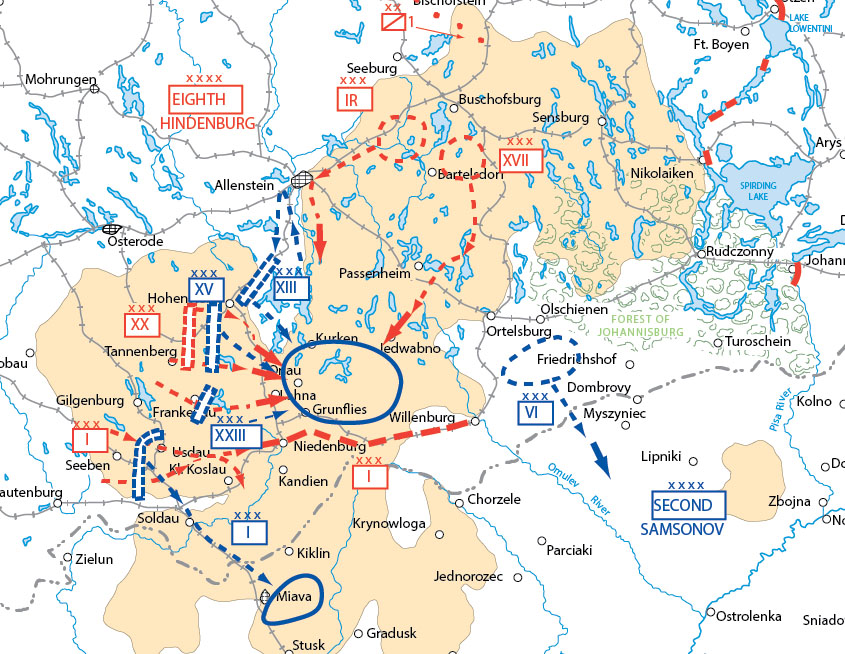
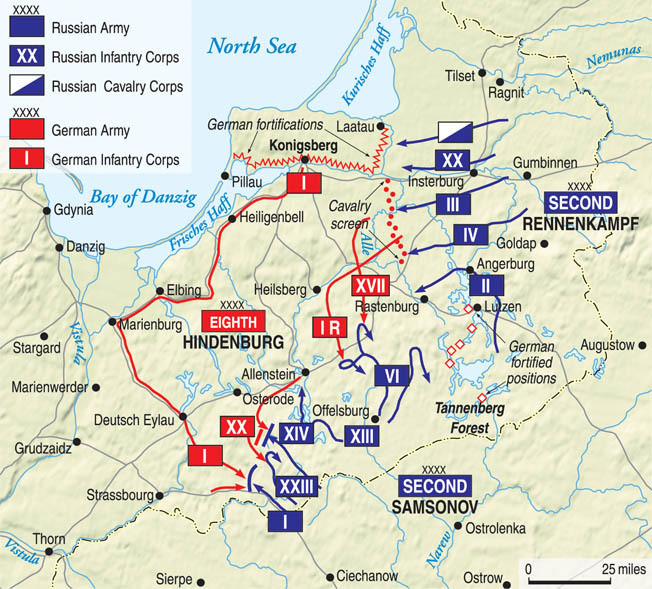
A comprehensive Map Of Battle Of Tannenberg showcases intricate strategic details, making it an invaluable tool for historians and military analysts. These maps typically feature troop positions for both the German Eighth Army and the Russian First and Second Armies, highlighting their initial deployments and subsequent movements. You can trace the daring envelopment strategy employed by the German command, observing how they skillfully concentrated forces against isolated Russian corps. The terrain itself plays a central role, with forests, lakes, and marshes often depicted, explaining why certain routes were chosen or avoided. Key transport lines, like railways, are also visible, demonstrating their vital importance for rapid troop deployment and supply logistics during the campaign. This visual evidence underscores the German army's superior organization and their effective use of intelligence, contrasting sharply with the fragmented Russian communication and coordination failures.
Studying these maps offers insights into the logistical challenges faced by both sides. For instance, the vast distances the Russian armies had to cover, often on foot, are clearly marked, alongside their vulnerable supply lines. Conversely, the German forces' ability to use their rail network to shift units rapidly between fronts becomes evident. The mapping of engagements, including specific battle locations like Usdau, Neidenburg, and Allenstein, allows researchers to pinpoint critical turning points. By visualizing these points, one can better understand the ebb and flow of combat, the defensive lines established, and the offensive thrusts that ultimately trapped the Russian Second Army. Such detailed representations are essential for grasping the complexities of command and control in a large-scale modern conflict. They reveal how geographical knowledge and logistical planning were just as critical as raw troop numbers.
Furthermore, these maps often incorporate symbols and legends that denote various military units, their strengths, and the dates of their movements. This level of detail helps observers appreciate the fluidity of the battlefield and the constant adjustments commanders made in response to evolving situations. The precise portrayal of flanking movements, such as the German XIX Reserve Corps' march to encircle the Russian left wing, becomes strikingly clear. It’s a powerful illustration of the military principle of achieving local superiority through concentration of force. For any serious study of World War I, examining these strategic maps is not merely an academic exercise; it is an active reconstruction of history, allowing you to walk through the decisions and consequences of one of the war's most iconic battles. Understanding these maps provides a deeper appreciation for the profound tactical implications.
Where Can You Explore Battle of Tannenberg Maps?
For U.S. searchers keen on exploring the Map Of Battle Of Tannenberg, numerous reputable sources exist, ranging from digital archives to physical museum collections. Online, institutions like the Library of Congress and the National Archives and Records Administration (NARA) often host digitized collections of historical maps, providing easy access from anywhere. University libraries with strong military history departments, such as those at the U.S. Army War College or West Point, also feature extensive digital and physical holdings. These resources frequently include high-resolution scans that allow for detailed examination of the battleground and troop movements. Websites specializing in World War I history or military cartography can also be excellent starting points, often compiling maps from various sources and offering contextual information to enhance understanding.
If you prefer a more tangible experience, consider visiting museums with significant World War I exhibits. The National WWI Museum and Memorial in Kansas City, Missouri, for example, might feature displays or archives with maps related to the Eastern Front, including Tannenberg. Similarly, local historical societies or specialized military libraries across the U.S. may possess original or reproduced maps. Before visiting, it's always wise to check their online catalogs or contact them directly to confirm map availability and access requirements. Some rare book dealers or antique map shops might also offer historical military maps for purchase, providing an opportunity for collectors to acquire authentic pieces. Always verify the authenticity and provenance of any historical map when considering a purchase.
For those seeking interactive learning, several educational platforms and historical simulation websites offer dynamic interpretations of the Tannenberg battlefield. These platforms can overlay historical map data onto modern satellite imagery, providing a unique perspective on the terrain as it exists today versus how it appeared during the battle. This blending of past and present helps visualize the strategic challenges more vividly. Furthermore, many academic publications and comprehensive histories of World War I include high-quality reproductions of these battle maps, making them accessible in book form. When selecting a map resource, prioritize those with clear legends, accurate historical context, and high resolution to ensure you gain the most insightful understanding of the Battle of Tannenberg's complex geography and troop engagements.
How to Analyze the Tannenberg Battleground on a Map?
Analyzing the Tannenberg battleground using a map requires a systematic approach to fully grasp its strategic significance. Begin by identifying the key geographical features: forests, lakes, rivers, and elevation changes. These natural elements dictated troop movements and defensive positions. For instance, the Masurian Lakes system significantly influenced the German flanking maneuvers, channeling Russian advances into predictable corridors. Next, locate the initial positions of the German Eighth Army and the Russian First and Second Armies. Pay close attention to the lines of communication and supply, particularly roads and railways, as their control was paramount for both offensive and defensive operations. Understanding the starting points helps you establish the context for subsequent movements.
Trace the movements of each army corps and division throughout the battle, paying attention to the dates marked on the map. Look for instances of rapid redeployment, such as the German shift of forces via rail from facing the Russian First Army in the north to reinforcing their southern flank against the Russian Second Army. Identify the areas of concentrated combat and the points where encirclement or breakthroughs occurred. The map should clearly illustrate the pincers movement that trapped the Russian Second Army, highlighting the critical role of German coordination and the gaps in Russian intelligence and command structure. Note the strategic importance of towns and villages that served as logistical hubs or defensive strongpoints, as their capture or defense often marked significant phases of the battle.
To deepen your analysis, compare different renditions of the Tannenberg map if possible. Variations might exist in the level of detail, the depiction of terrain, or the interpretation of troop movements. Cross-referencing can provide a more comprehensive and nuanced understanding of the battle's complexities. Consider the limitations of historical maps, such as potential inaccuracies or simplified representations. Reflect on how weather conditions, which are not typically shown on maps, could have influenced the movements and morale of the troops. By meticulously examining geographical features, troop dispositions, and the timeline of events, you can reconstruct the tactical decisions and their consequences, gaining a profound appreciation for the factors that determined the outcome of this pivotal World War I encounter.
Why Was the Battle of Tannenberg So Crucial?
The Battle of Tannenberg was crucial for several compelling reasons, fundamentally shaping the course of World War I, particularly on the Eastern Front. It represented a devastating defeat for Russia, effectively eliminating its Second Army and severely weakening its ability to mount effective offensives for an extended period. This outcome relieved immediate pressure on Germany's eastern borders, allowing them to redeploy troops to the Western Front, where the war was stalemated in trench warfare. The German victory, achieved through brilliant strategic maneuvering and intelligence, boosted national morale and solidified the reputations of commanders Paul von Hindenburg and Erich Ludendorff, who would later play dominant roles in the German war effort. Their success here showcased the effectiveness of rapid rail deployment and focused attacks.
Beyond the immediate military impact, Tannenberg had significant political and psychological ramifications. For Russia, the defeat fueled internal discontent and highlighted the inefficiencies and poor leadership within its military, contributing to the growing instability that would eventually lead to the Russian Revolution. It exposed systemic problems in communication and coordination, demonstrating how a technologically advanced military could exploit such weaknesses. Conversely, for Germany, the victory became a powerful propaganda tool, portrayed as a heroic defense of the homeland against overwhelming odds. This narrative helped sustain public support for the war, even as the conflict became prolonged and costly on other fronts. The battle’s strategic lessons influenced military thinking for decades, emphasizing the importance of mobility and decisive encirclement.
Furthermore, the Battle of Tannenberg altered the strategic balance of power in Eastern Europe for the early years of the war. Russia, a vast empire with immense manpower, was initially expected to overwhelm Germany quickly. Tannenberg shattered this illusion, demonstrating that superior tactics and organization could overcome numerical disadvantage. This forced the Allies to adjust their strategies, recognizing the need to provide more support to Russia and to address the strength of the German military. The legacy of Tannenberg continues to be studied in military academies worldwide, serving as a classic case study in operational art and decisive maneuver warfare. Its impact resonated throughout the war and beyond, making any study of World War I incomplete without understanding this pivotal battle and its geographical context as depicted on its maps.
Frequently Asked Questions About the Battle of Tannenberg Map
What was the main purpose of the Battle of Tannenberg?
The main purpose of the Battle of Tannenberg was Germany's defense against two invading Russian armies in East Prussia during the early weeks of World War I. Germany aimed to repel the Russian advance, prevent an invasion of German territory, and secure its eastern frontier. The German strategy focused on swiftly encircling and destroying the Russian Second Army, thereby achieving a decisive victory that would stabilize the front and allow for troop redeployment.
Where exactly did the Battle of Tannenberg take place?
The Battle of Tannenberg took place in East Prussia, a historical region that is now part of Poland, primarily near the town of Olsztynek, then known as Hohenstein. The name "Tannenberg" was adopted for symbolic reasons, referencing an earlier medieval battle. The actual engagements spanned a wide area, characterized by forests, lakes, and marshes, making the terrain a crucial factor in the strategic maneuvers and the eventual German victory.
Who were the key commanders in the Battle of Tannenberg?
The key commanders in the Battle of Tannenberg were Germany's Paul von Hindenburg and Erich Ludendorff, who formed a formidable partnership. On the Russian side, the Second Army was commanded by General Alexander Samsonov, and the First Army by General Paul von Rennenkampf. The German commanders expertly coordinated their forces, while the Russian command suffered from poor communication and lack of synchronized movements, contributing to their catastrophic defeat.
How can studying a Tannenberg map help understand WWI?
Studying a Tannenberg map offers a vital visual aid to understand WWI by illustrating the early strategic dynamics of the Eastern Front. It clarifies complex troop movements, terrain advantages, and the impact of logistical challenges. Maps help visualize the German encirclement tactic, Russian communication breakdowns, and the decisive nature of the battle. This direct visual approach provides context for the broader military and political implications of the war.
Are there interactive maps of the Battle of Tannenberg available online?
Yes, interactive maps of the Battle of Tannenberg are available online through various historical and educational websites. These digital resources often allow users to zoom in on specific areas, track troop movements over time, and access contextual information about units and commanders. Websites of university military history departments, large archives, and specialized World War I history platforms are excellent places to find these engaging and informative interactive maps.
Conclusion: Unlocking History Through the Map of Tannenberg
Exploring the Map Of Battle Of Tannenberg provides an unparalleled opportunity for U.S. audiences to delve into one of the most significant military encounters of World War I. These maps are not merely static images; they are dynamic historical documents that illuminate the strategic brilliance and logistical challenges defining early 20th-century warfare. Understanding the terrain, troop movements, and the critical decisions depicted on these maps is essential for anyone seeking a deeper appreciation of this pivotal German victory and its profound impact on the Eastern Front. Whether you are a student, a history enthusiast, or a military strategist, the insights gained from analyzing these detailed battleground maps are invaluable.
For those eager to expand their knowledge, we encourage you to seek out the various resources available. Digital archives and university collections offer convenient access to high-resolution scans, allowing for detailed study from the comfort of your home. Additionally, visiting national or local military museums can provide the unique experience of viewing original maps and artifacts, enriching your understanding through a tangible connection to history. Interactive online platforms further enhance this learning journey, providing engaging ways to visualize the battle's unfolding narrative and to grasp the intricate interplay of forces and geography that defined Tannenberg.
Ultimately, engaging with a Map Of Battle Of Tannenberg empowers you to move beyond abstract historical accounts and to truly visualize the scale and intensity of the conflict. It clarifies why certain outcomes occurred and how military leaders made decisions under immense pressure. This active engagement with primary source material fosters a more robust and nuanced understanding of World War I and its enduring legacy. Take the next step in your historical exploration by immersing yourself in these compelling maps, and unlock the strategic lessons embedded within their lines and symbols, gaining a profound appreciation for this epoch-defining engagement.
Battle of Tannenberg map details, WWI Eastern Front map, historic military maps US, interpreting Tannenberg strategy, where to find battle maps, World War 1 map resources, East Prussia battleground map, Tannenberg troop movements


The Battle Of Tannenberg August AX00229 Buchholzer Stra E Military History 73959ADBA8777DC3EB85B45053E6404F Wwi 73959ADBA8777DC3EB85B45053E6404F Group IV Battles 106488255 With Maps Strategy And Tactical Analyses FM6GARRB0YG4A XRSY6FIYOXHZOOTXN1B6QRG8IEW FM6GARRB0YG4A XRSY6FIYOXHZOOTXN1B6QRG8IEW La Batalla De Historia Pol Tica Leyenda NARRARE DI STORIA Tennenberg Mapa Alternate Poland 1914 Page Alternatehistory Com Battleoftannenberg Jpg 967017 TMP First Or Grunwald Topic 2528beginning2529 German 2528beginning2529 Phases 1914 Products AX00231 1410 Warhistory Org Tann MAP1 Tannemberg Schlacht Von 1410 Btg Karte Bei 1410 Eroffnung 1410 Erffnung Middle Phase Map Medieval D0AC73CE5FB2E1EDEF8AA203AB6A30EC.


Battle Of Tannenberg Scribble Maps ZDZB6ZDJB5 Thumb ZDZB6ZDJB5 Marne Maptannenberg Line Wikipedia Audio Article Youtube Hqdefault Tanneberg Map The Tannenburg Massacre In Marshes Warfare History Network M 1410 Part I Warhistory Org 1706492833 1410 1706492833 1410 Grunwald Analysis NJULA Maxresdefault Batalla De C1MYIUOOJ4 C1MYIUOOJ4 By Mackenzie Angelo On Prezi KBCXDF4YL2FRIJO2R5NNARYGLX6JC3SACHVCDOAIZECFR3DNITCQ Nick Dowling 7ZVY52BDD53DDYR62XGLLOI3JT6JC3SACHVCDOAIZECFR3DNITCQ Lasievolution 1914 A Stunning German Victory WWI Europe Outbreak World War.


WW1 Timeline Timetoast Timelines TANN1 Eng TANN1 Tanneberg Line Campaign PDF Battle Of Tannenberg Map World War I B1FF55D2D252F50DE0C28F1638337D02 Edgeshery Blog N By Brooke Ridgedell On Prezi RXE57LRFTYB2CV2RCVMKYCD3E36JC3SACHVCDOAIZECFR3DNITCQ PC Preview Gamewatcher TANNENBERG5 The In DWO HS Tannenbergiii Aw Jpg Mappa Della BATTAGLIA DI Dal Libro La Storia Grande Guerra Completa Degli Eventi Fino Ad Oggi Diplomatici E Documenti Stato Reynolds Francis Joseph 1867 1937 Churchill Allen Leon Miller Trevelyan 1877 1959 Wood Leonard 1860 1927 Knight Austin Melvin 1854 1927 Palmer Frederick 1873 1958 Simonds Frank Herbert 1878 Ruhl Arthur Brown 1876 Pubblicato Nel 1920 2JTXT7T 1867 1937 1877 1959 1860 1927 1854 1927 1873 1958 1878 1876 1920 2JTXT7T Review A Very Fun And Rather Authentic WW1 FPS Game TGG Poolhety 83fefe2f4ad2593b5512c6da1879cdd0 Wwi 83fefe2f4ad2593b5512c6da1879cdd0 Postcard Showing August 1914 1927 1933 U L Q1OPZR30 1914 1927 1933 Q1OPZR30.